
Access Bank has cleared a $500 million dollar-debt maturity using its own foreign-currency liquidity, removing a sizeable repayment from its funding calendar. The bank’s September 21, 2026 announcement said the five-year senior unsecured Eurobond had been redeemed in full on its scheduled maturity date.
For shareholders of its listed parent, Access Holdings, the important detail is the source of repayment. According to the bank’s redemption notice, existing foreign-currency resources funded the settlement entirely. Management also said the payment caused no adverse effect on operations or liquidity. That last assessment is the bank’s own statement; the announcement does not supply a post-redemption dollar-liquidity ratio.
A five-year obligation reaches its end
The bond was issued on September 21, 2021, carrying a fixed annual coupon of 6.125%, payable twice a year. The original issuance announcement describes the five-year instrument and its semiannual interest payments. Access says all scheduled coupons were met during the instrument’s life.
At the original $500 million face amount, the coupon equated to $30.625 million a year, or $15.3125 million for each full half-year. Those are calculations from the contractual terms, excluding fees and any other financing costs. They explain the scale of the obligation that has ended; they should not be read as a forecast of an equivalent increase in next year’s profit.
The initial issue attracted an order book above $1.6 billion, according to the bank’s 2021 issuance announcement. It was issued under a $1.5 billion global medium-term note programme and listed in London. The repayment closes that particular transaction, from international fundraising through to the return of principal.
Why repayment from existing dollars matters
A maturing dollar bond creates two separate demands. The borrower needs enough liquidity, and it needs that liquidity in the right currency. An institution can report substantial naira assets or accounting profits without those measures answering whether dollars are available on the required date.
Using existing foreign currency also avoids making this settlement conditional on selling a replacement bond at the last minute. If a borrower must refinance exactly when markets are expensive or unwilling to lend, the price of funding can become an immediate problem. Completing the payment removes that deadline risk for this instrument.
There is a balance-sheet trade-off, however. Cash used to repay borrowing is cash that can no longer fund loans, investments or another liability payment. Debt falls, but so do the liquid resources deployed to settle it. The transaction therefore cannot be evaluated simply by subtracting $500 million from borrowings and leaving every other balance-sheet item unchanged.
Nor does retirement of a bond automatically create a gain in the income statement. Principal repayment and interest expense are different accounting items. Future net earnings will depend partly on what the bank does with its remaining resources, whether it raises replacement funding elsewhere, and the return it forgoes on the assets used for settlement.
The next accounts need to show the wider picture
The redemption is a concrete funding milestone. A fuller assessment of Access’s financing position will require the remaining maturity schedule, the composition of foreign-currency assets and liabilities, and the costs attached to other borrowing. A single repaid instrument cannot establish that all refinancing pressure has disappeared.
There is also an important distinction for NGX readers: Access Bank issued and redeemed the Eurobond, while Access Holdings is the listed parent associated with ACCESSCORP shares. Equity holders participate in the wider group’s results and risks, rather than holding this bond directly through their shares.
The useful conclusion is specific. A known $500 million obligation has been discharged on time, and management says it did so with available dollars. The next test is how comfortably the remaining liquidity supports customers and the rest of the funding calendar. That is where subsequent financial disclosures will add information the redemption notice cannot provide.
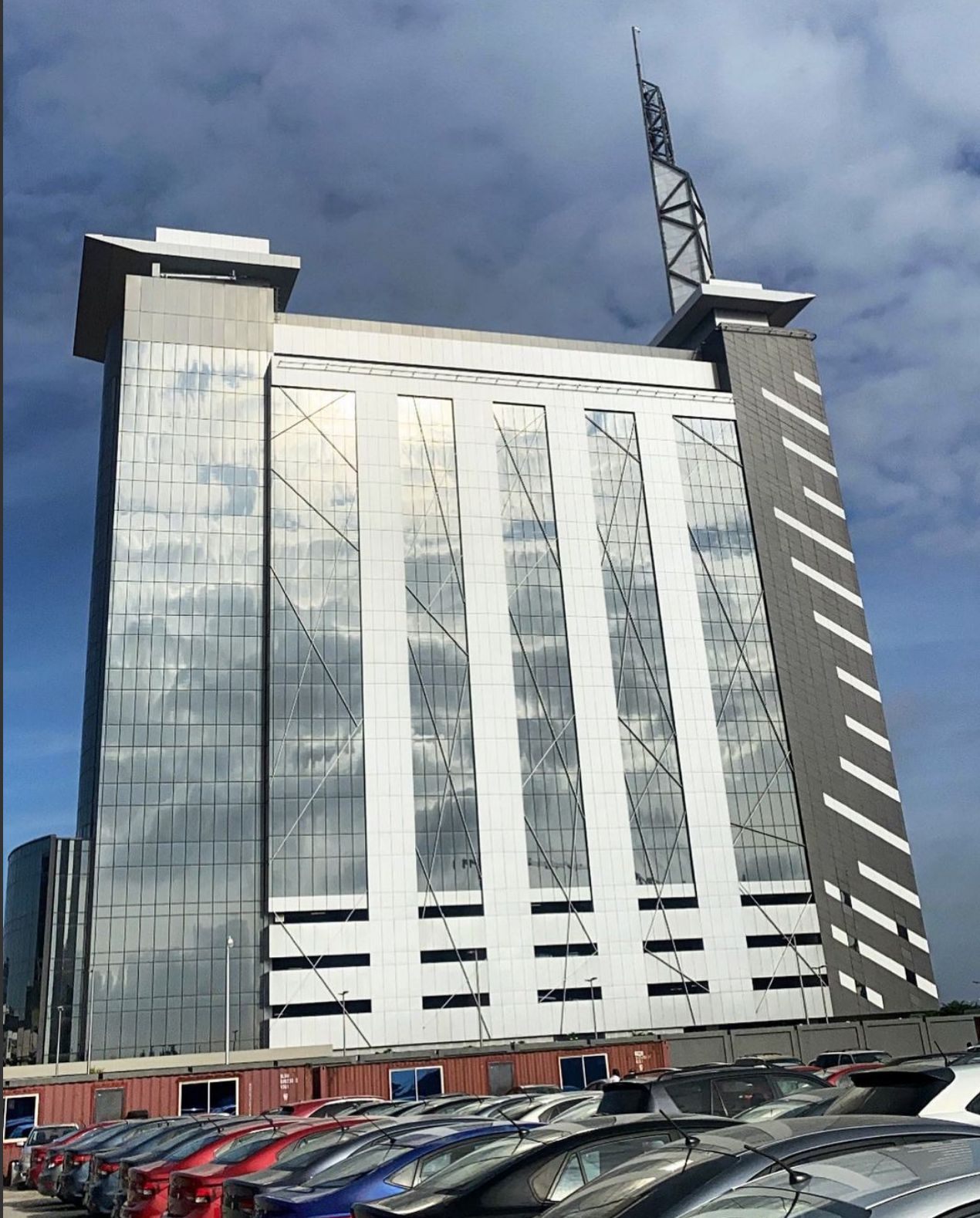
Image: Access Bank Tower in Oniru, Lagos, photographed in 2021. Archive photograph by Axl PGB / Wikimedia Commons, licensed CC BY-SA 4.0. Original photograph; no editorial alterations.
