
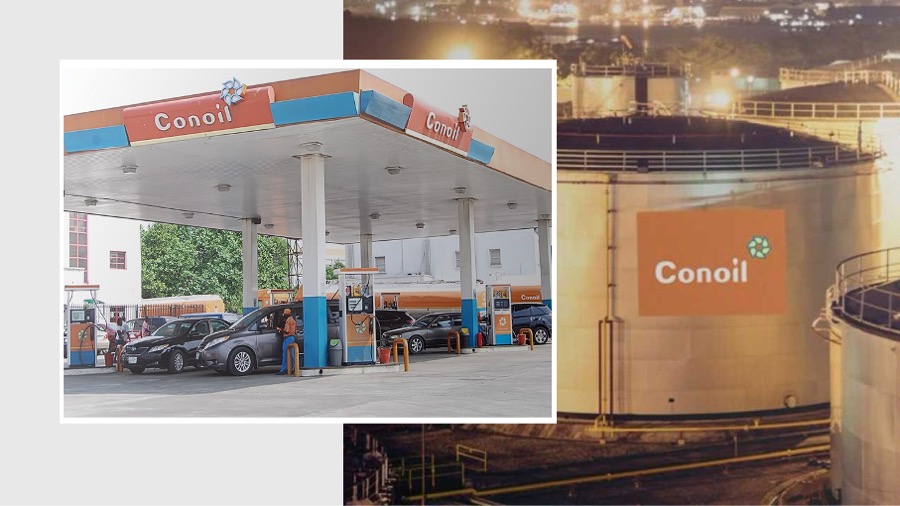
(Financial Statements for the Year Ended 31st December 2024)
Key Financial Metrics
- Revenue: ₦323.13 billion (2024) vs. ₦201.39 billion (2023) → 60.5% growth
- Gross Profit: ₦28.41 billion (2024) vs. ₦19.83 billion (2023) → 43.3% increase
- Profit Before Tax (PBT): ₦13.81 billion (2024) vs. ₦12.28 billion (2023) → 12.5% increase
- Profit After Tax (PAT): ₦11.39 billion (2024) vs. ₦9.87 billion (2023) → 15.4% growth
- Earnings Per Share (EPS): 1,641 kobo (2024) vs. 1,422 kobo (2023)
- Net Assets Per Share: 6,068 kobo (2024) vs. 4,776 kobo (2023)
- Dividend Per Share: No declared dividend in 2024 (2023: 250 kobo)
Conoil Plc achieved remarkable revenue growth of 60.5%, reflecting increased sales in petroleum products, benefiting from heightened demand, market expansion, and strategic pricing adjustments. The company’s ability to optimize supply chain logistics and strengthen distribution networks played a crucial role in driving revenue growth. Additionally, investments in technology-driven fuel management systems and enhanced customer engagement strategiescontributed to higher sales volumes and improved operational efficiency.
While profitability improved with PBT rising by 12.5% and PAT increasing by 15.4%, cost pressures presented notable challenges. The higher cost of crude oil imports, increased distribution expenses, and a surge in borrowing costs due to elevated interest rates placed downward pressure on profit margins. Additionally, inflationary trends and currency devaluation further escalated operational costs, requiring the company to implement cost control initiatives and margin optimization strategies to sustain long-term profitability.
Guidance
- Revenue growth of 60.5%, primarily driven by higher petroleum product sales.
- Improved profitability, with earnings per share rising by 15.4%.
- No dividend declared for 2024, likely due to capital reinvestment or balance sheet strengthening.
Operational Highlights & Cost Management
- Cost of Sales: ₦294.72 billion (2024) vs. ₦181.56 billion (2023) → 62.3% increase, reflecting higher input costs.
- Distribution Expenses: ₦4.99 billion (2024) vs. ₦2.76 billion (2023) → 80.7% increase, suggesting higher logistics costs.
- Administrative Expenses: ₦5.73 billion (2024) vs. ₦4.49 billion (2023) → 27.6% rise, driven by inflation and operational expansion.
- Finance Costs: ₦3.88 billion (2024) vs. ₦1.96 billion (2023) → 98.5% increase, indicating higher borrowing costs.
The company experienced a substantial rise in costs across multiple segments, with the largest impact seen in cost of sales and finance costs. Rising fuel prices, increased transportation expenses, and interest rate hikes led to higher expenditures, straining overall profitability. Additionally, inflationary pressures and currency depreciation contributed to escalated input costs, impacting supply chain operations and logistics efficiency.
Distribution expenses saw an 80.7% increase, reflecting increased fuel and transportation costs due to macroeconomic conditions. The sharp rise in finance costs, nearly doubling from the previous year, was driven by higher interest rates on loans and increased debt servicing obligations, putting additional pressure on margins.
The company must focus on cost optimization strategies, supply chain efficiency enhancements, and financial restructuring to sustain profit margins. Additionally, renegotiating supplier contracts, exploring alternative financing options, and leveraging digital solutions for operational efficiency could provide long-term cost-saving benefits.
Revenue Breakdown
- All sales were made within Nigeria.
- Main revenue source: Petroleum product sales, which saw a 60.5% increase year-over-year.
Capital Expenditures & Shareholder Equity
- Total Assets: ₦113.57 billion (2024) vs. ₦97.48 billion (2023) → 16.5% growth
- Total Liabilities: ₦71.46 billion (2024) vs. ₦64.33 billion (2023)
- Retained Earnings: ₦37.93 billion (2024) vs. ₦28.97 billion (2023) → 30.9% increase
- Shareholders’ Funds: ₦42.11 billion (2024) vs. ₦33.15 billion (2023) → 27.0% increase
Conoil Plc maintained a strong balance sheet, with higher retained earnings and total assets, reflecting its commitment to financial sustainability and future growth. The company’s 30.9% increase in retained earningshighlights a deliberate strategy to fortify its capital base, fund operational expansions, and support long-term financial resilience.
Despite the decision not to declare a dividend in 2024, this move likely signals a strategic reinvestment initiative aimed at infrastructure upgrades, supply chain optimization, and expansion of its fuel distribution network. By prioritizing reinvestment over immediate shareholder payouts, Conoil Plc is positioning itself for enhanced profitability, operational scalability, and sustained competitive advantage in the evolving petroleum market.
Management Commentary
Key Takeaways:
- Revenue and profitability showed strong growth, but operational and finance costs increased significantly.
- Higher cost of sales impacted margins, yet profitability still improved.
- No dividend declared for 2024, likely indicating a focus on capital reinvestment.
- Financial stability remains strong, with higher retained earnings and shareholders’ equity growth.
Strategic Focus Areas:
- Enhancing cost efficiency to sustain profit margins.
- Managing borrowing costs to reduce financial expenses.
- Reinvesting capital into operational expansion and technology improvements.
- Exploring opportunities for improved supply chain logistics to minimize distribution expenses.
Outlook for 2025
Conoil Plc remains optimistic about sustained revenue growth, with a focus on:
- Continued petroleum product sales expansion.
- Strategic cost management to mitigate rising input prices.
- Optimizing capital allocation for long-term growth.
- Potential dividend resumption if financial position strengthens further.
Despite challenges from rising costs, Conoil Plc is well-positioned to capitalize on growth opportunities, leveraging strategic financial planning and operational improvements.
Conclusion
Conoil Plc delivered exceptional revenue growth of 60.5% and improved profitability, despite rising costs and financial expenses, which presented operational challenges. The company’s decision to withhold dividends suggests a strategic reinvestment approach, aimed at strengthening financial stability, funding operational expansions, and bolstering competitive positioning in the petroleum sector.
Moving forward, cost efficiency, capital allocation, and operational improvements will be key to maintaining profitability and shareholder value. The company plans to optimize supply chain logistics, enhance fuel storage capacity, and leverage digital transformation strategies to improve efficiency. Additionally, investments in alternative energy solutions and diversification into non-fuel revenue streams could provide long-term growth avenues, ensuring resilience in an evolving energy landscape.
