
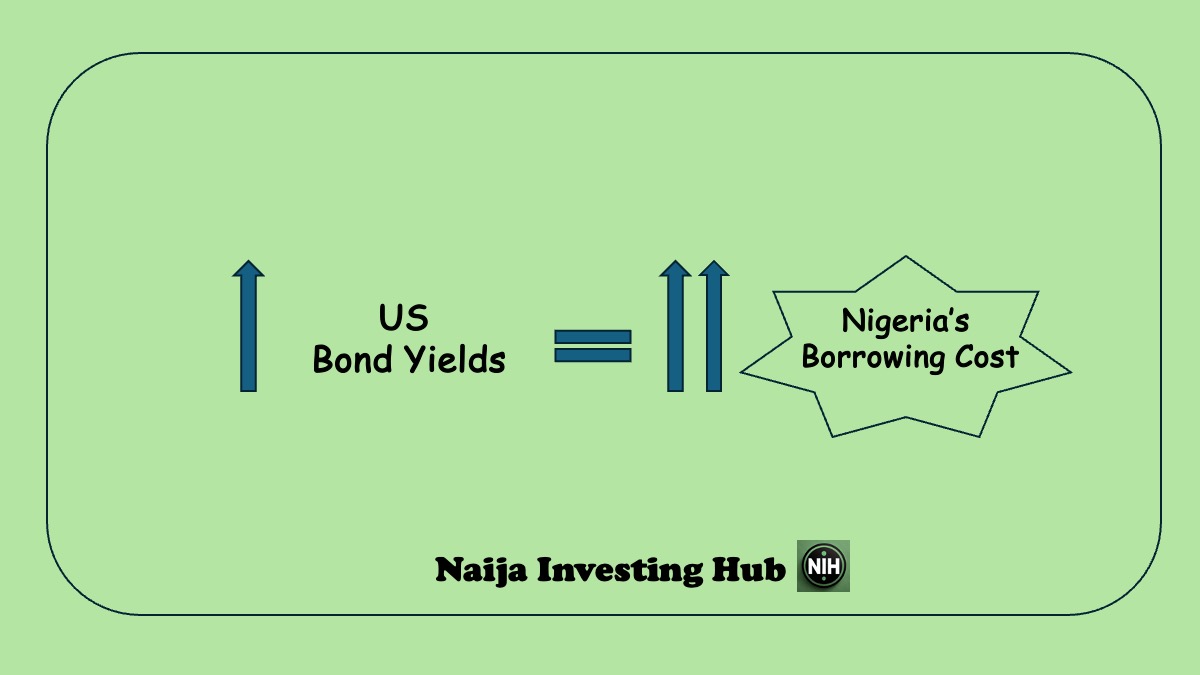
As US Treasury yields continue their ascent, Nigeria faces the prospect of increased borrowing costs in 2025. The Federal Reserve’s hawkish monetary policy has made dollar-denominated assets more attractive to global investors, creating a challenging environment for emerging markets like Nigeria. For Africa’s largest economy, rising borrowing costs could strain fiscal budgets, complicate debt management, and slow progress on critical infrastructure and development projects.
How Rising US Bond Yields Affect Borrowing Costs
1. The Global Benchmark
US Treasury yields set the benchmark for risk-free returns globally. As yields rise, emerging markets like Nigeria must offer higher returns on sovereign bonds to compete for investor capital.
2. A Strengthening Dollar
The strengthening US dollar, driven by higher yields, compounds the challenge for Nigeria:
- Increased Debt Servicing Costs: Dollar-denominated debt becomes more expensive to service as the naira weakens.
- Higher Financing Costs: Nigerian bonds require higher yields to attract foreign investors, pushing up borrowing costs for the government and businesses.
Nigeria’s Debt Landscape
1. Rising Debt Levels
- Nigeria’s public debt stood at ₦87 trillion ($113 billion) at the end of 2024, with external debt accounting for $48 billion.
- Dollar-denominated debt exposes Nigeria to exchange rate risks and rising global interest rates.
2. Debt Servicing Burden
- Debt servicing consumed nearly 90% of Nigeria’s revenue in 2024, leaving limited fiscal space for development spending.
- Higher borrowing costs in 2025 could exacerbate this ratio, leading to increased fiscal deficits.
3. Oil Revenue Dependency
- Oil accounts for the majority of Nigeria’s export earnings and forex reserves. Volatility in global oil prices poses a significant risk to the country’s ability to finance its debt obligations.
Implications for Nigeria
1. Increased Fiscal Pressure
- Rising borrowing costs will divert resources from critical sectors like healthcare, education, and infrastructure, limiting Nigeria’s ability to meet development goals.
- Fiscal deficits are likely to widen as the government struggles to balance increased debt servicing with revenue constraints.
2. Higher Costs for Domestic Borrowing
- As sovereign bond yields rise, domestic interest rates are likely to follow, increasing borrowing costs for businesses and consumers.
- Crowding out private investment could further slow economic growth.
3. Reduced Investor Confidence
- Higher borrowing costs and fiscal deficits may erode investor confidence, making it harder for Nigeria to access international capital markets at favorable terms.
4. Currency Depreciation
- A weakening naira, driven by forex shortages and capital outflows, will increase the cost of repaying dollar-denominated debt, putting additional pressure on reserves.
Sectors Most Affected
1. Infrastructure Development
- Many large-scale infrastructure projects rely on foreign loans. Rising costs could delay or cancel projects critical to economic growth.
2. Manufacturing and Trade
- Import-dependent industries will face higher costs as currency depreciation drives up the cost of imported inputs and machinery.
3. Financial Services
- Banks with significant forex exposure will face increased risks, and higher interest rates could reduce loan demand.
4. Consumer Goods
- Rising inflation and borrowing costs will dampen consumer spending, affecting retailers and manufacturers reliant on domestic demand.
Policy Challenges for Nigeria
1. Debt Management
- Restructuring existing debt to extend maturities and reduce near-term repayment obligations can provide fiscal relief.
- Issuing more domestic currency bonds may reduce forex exposure but could strain local liquidity.
2. Forex Stability
- Declining forex reserves, compounded by reduced foreign investment inflows, limit the Central Bank of Nigeria’s (CBN) ability to stabilize the naira.
- Transparent forex policies and increased forex supply through non-oil exports will be critical to maintaining stability.
3. Balancing Growth and Inflation
- The CBN’s decision to raise interest rates to attract capital inflows must be balanced against the need to support domestic investment and economic growth.
Strategies to Mitigate Rising Borrowing Costs
1. Diversify Revenue Streams
- Expanding non-oil revenues through improved tax collection, customs enforcement, and economic diversification can reduce fiscal reliance on borrowing.
2. Leverage Green Financing
- Issuing green bonds and promoting renewable energy projects can attract environmentally conscious investors, providing a lower-cost alternative to traditional debt.
3. Promote Public-Private Partnerships (PPPs)
- Collaborating with private investors to finance infrastructure projects can reduce reliance on sovereign borrowing.
4. Encourage Local Capital Market Development
- Deepening domestic capital markets through innovative instruments, such as sukuk and diaspora bonds, can provide alternative funding sources.
5. Boost Non-Oil Exports
- Supporting export-oriented sectors, such as agriculture and manufacturing, can generate forex earnings and reduce the trade deficit.
6. Engage with Multilateral Institutions
- Collaborating with the International Monetary Fund (IMF) and World Bank for concessional financing and technical assistance can provide temporary fiscal relief.
Opportunities Amid Challenges
1. Export Competitiveness
- A weaker naira could make Nigerian goods more competitive globally, presenting opportunities for export-driven industries.
2. Long-Term Investment
- Higher yields on Nigerian bonds may attract investors seeking higher returns, particularly if fiscal reforms signal improved economic management.
3. Regional Trade
- Expanding trade partnerships within Africa through the African Continental Free Trade Area (AfCFTA) can open new markets for Nigerian goods, reducing reliance on Western capital markets.
The Way Forward
For Policymakers
- Policymakers must adopt a multi-pronged strategy that includes fiscal discipline, revenue diversification, and targeted borrowing to mitigate the impact of rising debt costs.
- Transparent communication with investors and international lenders will be essential to maintaining confidence in Nigeria’s fiscal management.
For Businesses
- Companies should explore local sourcing to reduce import dependency and adopt hedging strategies to manage forex risks.
- Export-oriented businesses should focus on improving efficiency and expanding market access to capitalize on global opportunities.
For Investors
- Investors can identify opportunities in growth sectors, such as agriculture, technology, and renewable energy, which are poised to benefit from structural reforms and increased competitiveness.
Conclusion
Rising US Treasury yields in 2025 are set to drive up Nigeria’s borrowing costs, straining fiscal resources and complicating economic recovery efforts. While the challenges are significant, they also highlight the urgency of implementing structural reforms, diversifying revenue streams, and promoting financial resilience.
By adopting proactive policies and leveraging alternative funding sources, Nigeria can navigate this period of global tightening while building a more sustainable and diversified economy. Collaboration among policymakers, businesses, and investors will be critical to ensuring long-term fiscal and economic stability.