
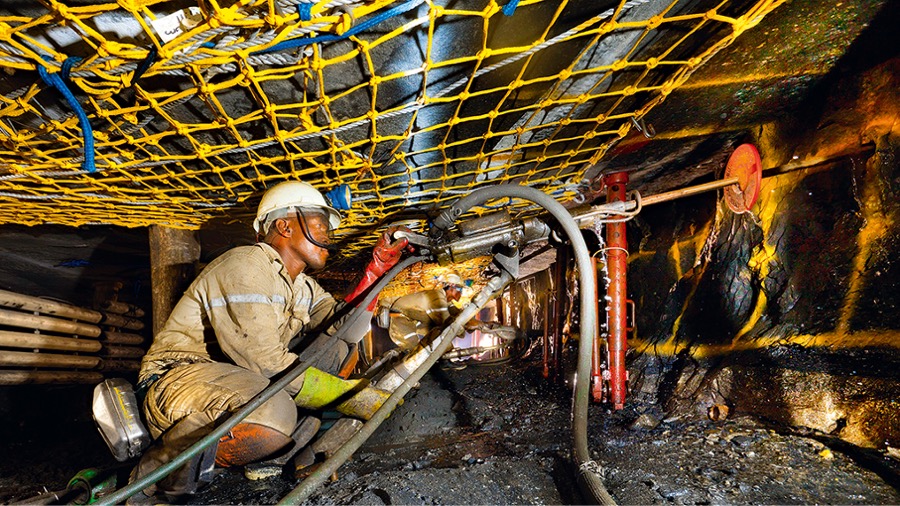
South Africa’s mining sector has rebounded strongly, recording a 7% growth in output year-on-year as of December 2024. The recovery has been primarily driven by a surge in global demand for precious metals, including gold, platinum, and palladium. Below is an in-depth analysis of the factors fueling this growth, the key players in the industry, and what lies ahead for South Africa’s mining sector.
Precious Metals Lead the Charge
- Gold Output:
- Global Demand: With economic uncertainties lingering in the US and Europe, investors have flocked to gold as a safe-haven asset. Prices reached $2,100 per ounce in December, a 15% increase from the previous year.
- South Africa’s Contribution: Major mining houses such as AngloGold Ashanti and Gold Fields reported production growth of 10% and 8%, respectively, driven by operational efficiency and higher grades.
- Platinum and Palladium:
- Automotive Catalyst Demand: Stricter emission standards globally have fueled demand for platinum-group metals (PGMs), essential for catalytic converters.
- China’s Role: China’s rebound in automobile production post-COVID has significantly boosted palladium imports, with South Africa supplying over 70% of the world’s demand.
Operational Improvements and Investments
- Technological Advancements:
- Companies like Sibanye Stillwater have adopted automated mining techniques, improving efficiency and safety in deep-level mining operations.
- AI-driven systems are now deployed to predict ore grades, optimize extraction, and reduce waste.
- Infrastructure Development:
- Key investments in rail and port infrastructure, particularly in the Richards Bay and Durban corridors, have reduced logistical bottlenecks, ensuring smoother exports.
- Energy Innovations:
- Several mines are transitioning to renewable energy, leveraging solar and wind power to reduce reliance on Eskom’s grid, which has been plagued by load-shedding.
Challenges Facing the Sector
- Energy Supply Issues:
- Eskom’s load-shedding continues to hamper production. Some mines report losses of up to 15% of output due to power cuts.
- The government’s move to deregulate energy procurement has allowed mining companies to build independent power projects, but implementation remains slow.
- Regulatory Environment:
- Bureaucratic delays in issuing mining licenses and environmental clearances have been a longstanding issue, slowing down the launch of new projects.
- Global Market Volatility:
- Prices for precious metals remain sensitive to geopolitical developments and Federal Reserve rate policies, which could impact demand.
Economic Impact
- Contribution to GDP:
- Mining accounts for 8% of South Africa’s GDP. The 7% growth has added an estimated ZAR 30 billion to the economy in 2024.
- Export revenues from minerals have bolstered the trade surplus, cushioning the impact of a weaker rand.
- Employment:
- The sector has created approximately 15,000 new jobs over the past year, with a focus on skilled labor for automation roles.
- Royalties and Taxes:
- Increased output has resulted in a 12% rise in royalties paid to the government, aiding fiscal consolidation efforts.
Key Players in the Sector
- Anglo American:
- Reported strong growth in platinum output, with an 8% year-on-year increase.
- Expansion projects in the Bushveld Complex are expected to add significant capacity by 2026.
- Impala Platinum:
- Benefited from the high demand for palladium, with revenue climbing 20% compared to 2023.
- Harmony Gold:
- Focused on sustainability and efficiency, Harmony has reduced costs by 5% while increasing gold output by 6%.
Future Outlook
- Sustained Demand for Precious Metals:
- Continued global economic uncertainty is likely to sustain high demand for gold and PGMs.
- Green hydrogen projects could boost platinum demand, further supporting South African output.
- Policy Reforms:
- The South African government’s renewed commitment to streamlining mining regulations could unlock investment worth ZAR 100 billion over the next five years.
- Energy Independence:
- With several renewable energy projects set to come online by 2025, energy constraints on mining operations may ease significantly.
