
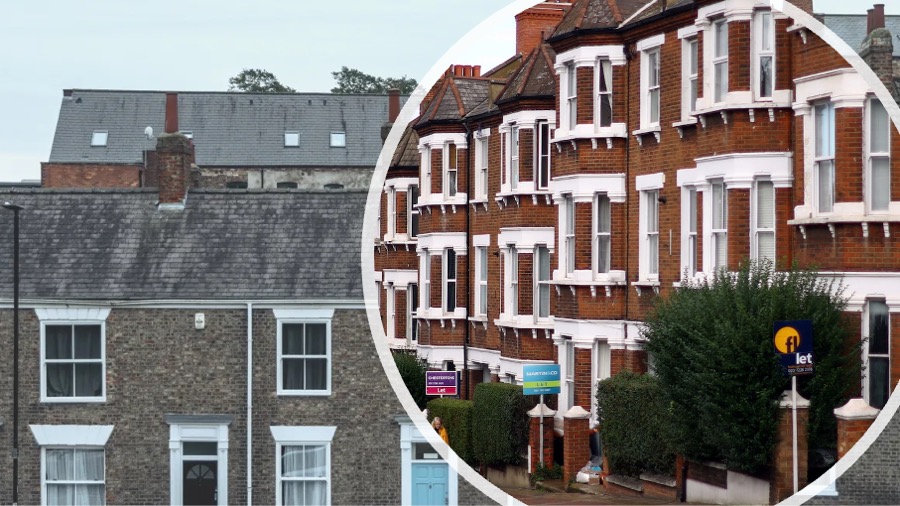
The UK housing market is experiencing significant deceleration, marked by rising mortgage rates now at their highest level in 15 years. This environment is reshaping affordability, demand, and broader economic implications. Below is a detailed analysis of the factors driving these changes and the market’s potential trajectory.
The Role of Rising Mortgage Rates
- Current Mortgage Rates: Mortgage rates have surged beyond 6%, influenced by the Bank of England’s sustained monetary tightening. The base rate now stands at 5.25%, a direct response to persistent inflationary pressures.
- Impact on Buyers: Higher mortgage costs have priced out many first-time buyers, as affordability metrics have worsened. Monthly repayments for new mortgages have increased by approximately 20-30% compared to 2020.
- Refinancing Challenges: Homeowners with maturing fixed-rate deals are facing significant payment hikes. For instance, a homeowner refinancing a £200,000 loan may see monthly payments rise by over £200.
Decline in Housing Transactions and Prices
- Housing Sales: Data from the Land Registry indicates a 12% year-on-year drop in completed housing transactions for Q4 2024.
- Price Trends: Nationwide and Halifax report average price declines of 2.5% and 3.1%, respectively, for December 2024. London and the South East have been hit hardest, with double-digit declines in some areas.
Regional Variations
- Northern England and Scotland: These regions show resilience, with price growth remaining flat or slightly positive due to lower average housing costs.
- Urban Centers vs. Rural Areas: Cities like Manchester and Edinburgh see relative price stability, while rural areas experience larger corrections due to the pandemic-induced suburban migration reversal.
Broader Economic Implications
- Consumer Spending: With higher housing costs, disposable income is shrinking, particularly among younger households.
- Construction Slowdown: Developers have reported a sharp drop in new housing starts, with a 15% decline in planning applications compared to the previous year.
- Banking Sector: Rising defaults in mortgage repayments could weigh on banks, though stress tests indicate resilience in the sector.
Government and Industry Responses
- Policy Measures:
- The UK Treasury is under pressure to introduce mortgage relief schemes. However, Chancellor Jeremy Hunt emphasized fiscal prudence over direct interventions.
- Stamp duty adjustments remain a possibility to stimulate transactions.
- Industry Moves:
- Lenders like Lloyds and Barclays have introduced fixed-rate mortgage products with longer tenures, such as 10 and 15 years, to provide rate stability.
- BoE Guidance: The Bank of England signaled a potential pause in rate hikes if inflation moderates, which could ease mortgage pressures.
Future Outlook
- Short-Term Trends:
- Price corrections are expected to deepen in Q1 2025, with a potential 5% drop forecast by analysts at Savills.
- Mid-to-Long Term:
- Recovery depends on inflation easing and the Bank of England pivoting toward rate cuts, potentially by late 2025.
- Demographic factors, including growing millennial demand, could underpin a gradual recovery.
